Roblox, Kids, and the New Digital Playground
Between creative freedom and smart manipulation, Roblox’s square characters hide a full-fledged economy, an intense social experience, and educational questions every parent needs to ask.

4 February 2026
|

12 minutes
|
“Don’t say, ‘I didn’t know’ or ‘I thought it was something innocent.’ The red flags are everywhere.” Once I realized this was a harmful game causing a great deal of damage, I decided to stop immediately, despite the risks. “If you care about your children’s well-being, stop the madness,” a concerned mother warned on Facebook. Another mother asked, “What do we do about this epidemic?”
In recent years, Roblox has become almost synonymous with our children’s screen time. Many parents report that their kids spend hours playing, ask for money, stay up late for updates, and get angry when they’re cut off from the screen. At the same time, social media is flooded with complaints, worried posts, and even calls to take action against the platform. But is Roblox really different from any other game? Are the concerns supported by evidence, or are they simply the latest version of familiar parental anxieties in the digital age? As usual, the answer is complicated.
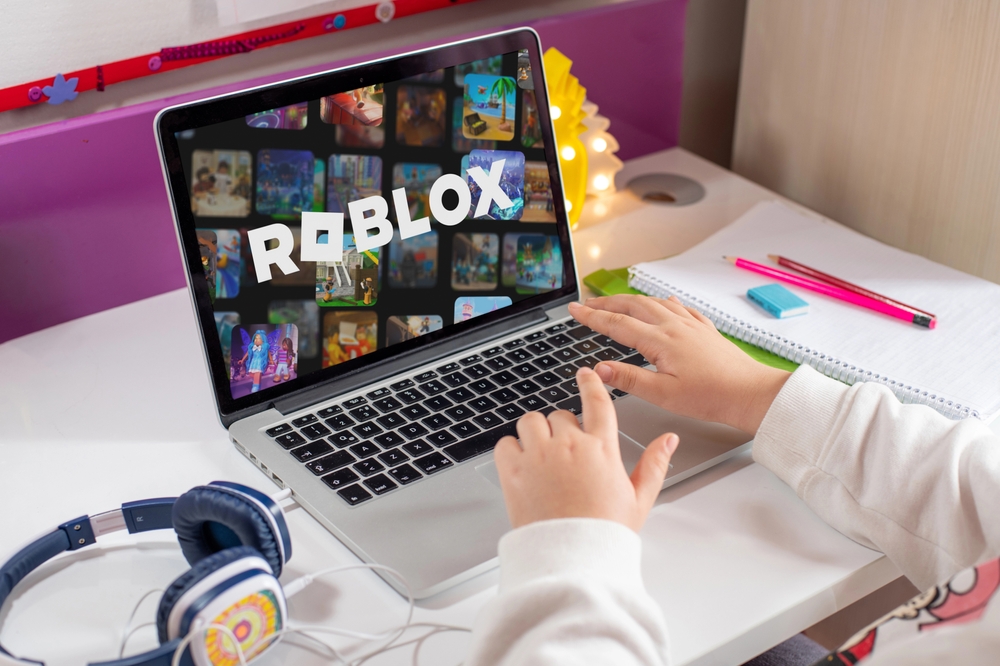
In recent years, Roblox has become almost synonymous with our children’s screen time. Roblox on a computer screen | Yalcin Sonat, Shutterstock
What is Roblox?
Roblox isn’t just another game—it’s an entire platform that hosts a huge range of games. You can think of it as a kind of “YouTube for games”: anyone with basic technical skills can create a game using simple, accessible tools, then invite others to jump in and play with a click. That’s how hundreds of thousands of virtual worlds have emerged—ranging from multiplayer survival games to simulations, puzzles, racing games, and some of today’s trendiest social games
Graphically, Roblox can look like it’s stuck in the 1990s: blocky characters, basic animations, and especially simple graphics. But the platform’s appeal doesn’t come from how it looks—it comes from what it enables: an enormous variety of games, social play with friends, customizable avatars, and access from almost any device—phone, tablet, computer, and even consoles like Xbox. Roblox may not be the most technically advanced gaming platform, but it’s massive, lively, creative, social, and always within reach. And that’s exactly what makes kids fall in love with it.
As with any free service that attracts millions of users, it’s worth understanding how Roblox makes money and what happens behind the scenes. While many games are free to enter, much of their design is built around encouraging players to buy in-game items using a virtual currency called Robux. With Robux, kids can purchase special items, extra abilities, or access to restricted content—depending on how each individual game is designed. Many children now spend their allowance on these purchases.
Developers earn money through revenue sharing with the platform—often around 70% to developers, with the remainder going to Roblox. This creates a double incentive: developers have a reason to sell in-game items, and Roblox has a reason to promote developers’ success and keep expanding the variety of games available. In recent years, major brands have also joined the platform, creating branded worlds that generate additional income for both Roblox and creators.
This business model depends on increasing both screen time and spending. As a result, some games are designed to nudge children to play longer, return repeatedly, and feel they “need” digital items that signal status among their peers. That doesn’t mean Roblox is inherently dangerous, and it’s important to be clear that there’s no claim of deliberate harm. Still, the model underscores how essential parental awareness and involvement are. Parents need to understand what draws kids in, talk with them about digital choices, teach thoughtful spending habits, and set boundaries that support healthy, enjoyable use.
A girl purchasing items in a computer game with a credit card | MAYA LAB, Shutterstock
Games and Violence
The era we live in is defined by constant connection to screens. Phones, computers, gaming consoles, and more have become inseparable from everyday life in modern society. This reality poses a major challenge to traditional parenting, which must keep adapting to technology’s rapid pace. As video games and digital media become ever more embedded in children’s social worlds, a natural parental fear of potential harm can easily turn into overreaction. Some parents respond with strict, close monitoring—yet in many cases, cooperation and open conversation with children lead to better outcomes.
There’s a large body of research on the relationship between video games and violence—and this is where things get complicated. While some studies have found limited links, there is no definitive conclusion that video games cause real-world violence or aggression. A recent comprehensive, up-to-date study on the topic found no clear evidence that video games promote violence in everyday life, as distinct from behavior inside the game. When an effect is observed, it tends to be small, indirect, and highly dependent on context.
However, it’s important to be cautious in the other direction as well, because even if the game itself does not provoke violence in children, it can cause other problems. Games have the potential to encourage screen addiction and lead players to make excessive, unwise purchases within the game, which add up to a significant amount of money. Additionally, platforms like Roblox can expose children to content that is not appropriate for their age, such as graphic violence and even pornography, and lead to phenomena like peer pressure, which sometimes originates within the game itself and sometimes comes from friends around them. All of these are valid and important reasons for parents to become involved in their children’s games. They need to know how to set boundaries and explain to children how to play in a healthy and balanced way.
Still, it’s important to be cautious in the other direction. Even if a game doesn’t provoke violence in children, it can create serious problems. Games can drive compulsive screen use and push players into repeated in-game spending that may look minor in the moment but can quickly add up. Platforms like Roblox can also expose children to age-inappropriate content – graphic violence and even pornography – and become a source of peer pressure, sometimes from the game itself and sometimes from friends outside it. All of this is reason enough for parents to stay involved, set firm boundaries, and help children learn to play in a healthy, balanced way.
History shows that every generation of adults worries about the new technologies and trends they didn’t grow up with—and that their children pour their time into. Since the early twentieth century, the same cycle has played out with radio, television, comic books, rock music, social media, Fortnite—and now Roblox. In many cases, it turns into a domino effect: one parent shares a negative experience, others respond with stories of their own, and a kind of witch hunt builds—until the next trend arrives to replace the current “enemy of humanity.”
Some of the panic stems from simple unfamiliarity. To many worried parents, Roblox looks childish—but in reality, it’s a social network, a content platform, a creative tool, and a massive community rolled into one. That complexity demands a deeper understanding of its implications, not a dismissive “the kid is playing.”
Platforms like Roblox can expose children to age-inappropriate content, such as graphic violence and even pornography. A teenager playing on her phone in bed | Iren_Geo, Shutterstock
Parenting in the Digital Age
In most cases, the issue isn’t the new platform itself, but the parenting challenge of a digital world that changes at lightning speed. When a child wakes up at 3 a.m. to download an update, or can’t stop playing long enough to go to sleep, the root problem isn’t necessarily the game—at least not only the game. More often, it’s a symptom of unclear boundaries and of habits that require guidance and structure. Today it may be a platform like Roblox; tomorrow it could be a TV series, a social network, or the next trend that appears out of nowhere.
When we were kids, we had trends too—trading cards, stickers, collections, and TV shows—and they definitely consumed our attention. True, they weren’t engineered to create the same level of emotional attachment that many of today’s digital games are built to generate, but the parental dilemmas were strikingly similar: How much should we allow? When do we stop? Where do we draw the line?
The role of parents today isn’t to fight every new platform, but to stay present, understand the context, set healthy boundaries, and teach children to manage themselves in a world where the line between play and reality is increasingly blurred. Involvement and guidance—not simply cutting children off – offer better protection and equips them with tools they’ll need beyond the screen.
One important step is teaching children to be cautious about online scams. There’s no need to let them learn the hard way: engaged parents can explain how to trade virtual items fairly (“trading”), how to set clear expectations between the giver and the receiver, how to judge who’s on the other side of the screen—and, just as importantly, how to handle disappointment.
The same applies to virtual currency. Instead of banning all Robux transactions, parents can set a monthly allowance for in-game spending and use it as an opportunity to teach basic responsible money management. It’s also crucial that children feel they can share their Roblox experiences without fear of punishment. That openness makes it easier to teach them how to block harmful users, report abuse, and reach the relevant child-safety or cybercrime reporting hotline—if needed—or report inappropriate behavior directly through the Roblox platform. This equips kids with social coping tools and safety skills that will serve them throughout their lives. After all, our children are growing up in a digital world. The goal as parents isn’t to isolate them from it, but to help them become smart, aware, and responsible users.
The role of parents today is not to fight every new platform but to be present. A mother and son looking at a computer monitor at home | pikselstock, Shutterstock
The Good, the Bad, and the Ugly
Like almost any major digital platform, Roblox offers a wide mix of content and values. On the one hand, there’s a lot of good: children can develop creativity by designing characters and worlds, sharpen spatial thinking, and practice problem-solving through tasks and challenges. They also gain a social experience – playing and communicating with others—pick up basic ideas of game development and programming, and feel a real sense of achievement when they complete levels or create something others enjoy playing.
On the other hand, there’s also the bad: children can end up staring at screens for hours every day, pulled in by reward systems designed to encourage longer play and to make small in-game purchases that quietly add, and get caught up in social competition that fuels stress – or FOMO (Fear Of Missing Out)—the anxiety of being left out while something important is happening in the game or its surrounding community. And like any open online space, Roblox also includes experiences that aren’t appropriate for children. For all these reasons, parents should stay informed and know what their kids are doing – just as we’d want to know what’s happening on the neighborhood playground or at an after-school activity.
And if there’s good and bad, there’s an ugly side too—one that’s very real on Roblox. Trading and deal-making between kids can be harmless fun, but it’s also where scams and exploitation often happen. A player might promise a rare item and fail to deliver, pressure someone into an unfair trade, or take advantage of a new player who doesn’t yet understand values or basic rules. A key part of the parental role is spotting these red flags early—and teaching children how to respond safely and wisely when they appear.
What happens in the game isn’t fundamentally different from scams in the real world—from a seller who hides flaws in a product to offers that sound too good to be true. That is why it is important to teach children about caution, risk, agreements, trust, and boundaries. In that sense, Roblox can become a relatively safe social laboratory where parents can coach children through real-life lessons—without paying the price of a shady deal in the real world.
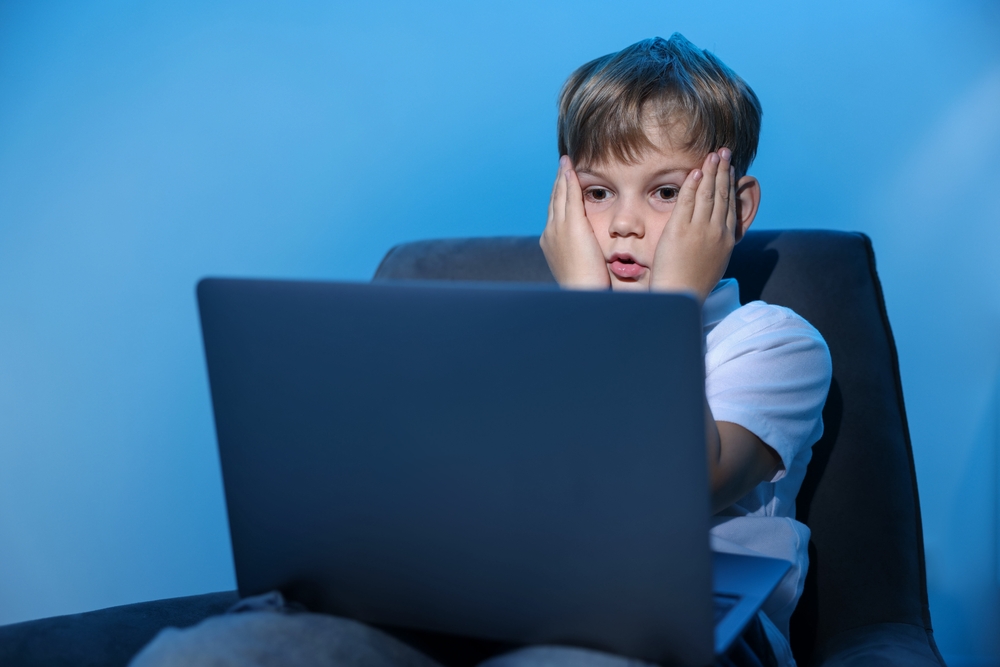
On Roblox, “trading” and deals between kids can be innocent—or turn into scams and exploitation. A frightened child in front of a computer | New Africa, Shutterstock
What Can Parents Do?
Parenting in the digital age isn’t easy, and many parents simply can’t be involved in everything their children do. That’s unfortunate, because involvement is still the most effective way to deal with Roblox—or with any other children’s hobby. The principle is the same whether it’s a video game, meeting friends at the park, going to an after-school activity, or anything else. That’s why it helps to play with your children occasionally and experience the game alongside them in a nonjudgmental way. It’s a chance for genuine quality time—and for seeing what’s actually happening on the screen, rather than relying on rumors or scary headlines—so you can set boundaries that fit your family, based on what you observe.
Alongside emotional involvement, parents shouldn’t neglect the technical tools. Some families—and even some governments—respond with hardline measures, from blanket blocks to calls for restrictive regulation, out of understandable concern for children’s safety. But in practice, it’s often more effective to use the safety features Roblox already provides. The worst option is ignoring the risks altogether, because that leaves children exposed to manipulation and harmful content without any safety net.
That’s why activating parental controls in the account settings is essential. These tools allow parents to limit content by age, disable chat entirely or restrict it to friends only, set spending caps, and lock the settings with a PIN so children can’t easily change them. Used alongside ongoing conversations, these safeguards help create a safer environment for children to play and explore.
Most importantly, talk with your children regularly about the risks. Explain what purchases, deals, and trades really mean inside the game, and guide them in how to navigate the digital world safely and responsibly – just as you teach them to recognize risks and handle dangers in everyday life.
The author is a cognitive psychologist and a lecturer in computer science at the Hebrew University .