Choking Without Feeling It: Carbon Monoxide Poisoning
The colorless, odorless gas kills thousands of people every year - especially during the cold season - and there is no effective antidote. How can carbon monoxide poisoning be prevented?
Our senses can’t detect carbon monoxide (CO). It has no taste, smell, or color. It is an extremely toxic gas produced during the incomplete combustion of fuels such as wood, coal, or gas. It causes tens of thousands of deaths worldwide each year. Many cases of carbon monoxide poisoning occur in winter, when enclosed indoor spaces are heated without adequate ventilation.
Exposure to carbon monoxide can be harmful within minutes at high concentrations, and within a few hours at lower levels. It can cause irreversible damage to the brain and heart – and even death. Carbon monoxide poisoning is difficult to identify because it isn’t accompanied by distinctive symptoms; instead, it typically causes “flu-like” complaints, including headache, dizziness, confusion, nausea and vomiting, shortness of breath, muscle aches and chest pain, visual disturbances, drowsiness, seizures, and, eventually, loss of consciousness and death.
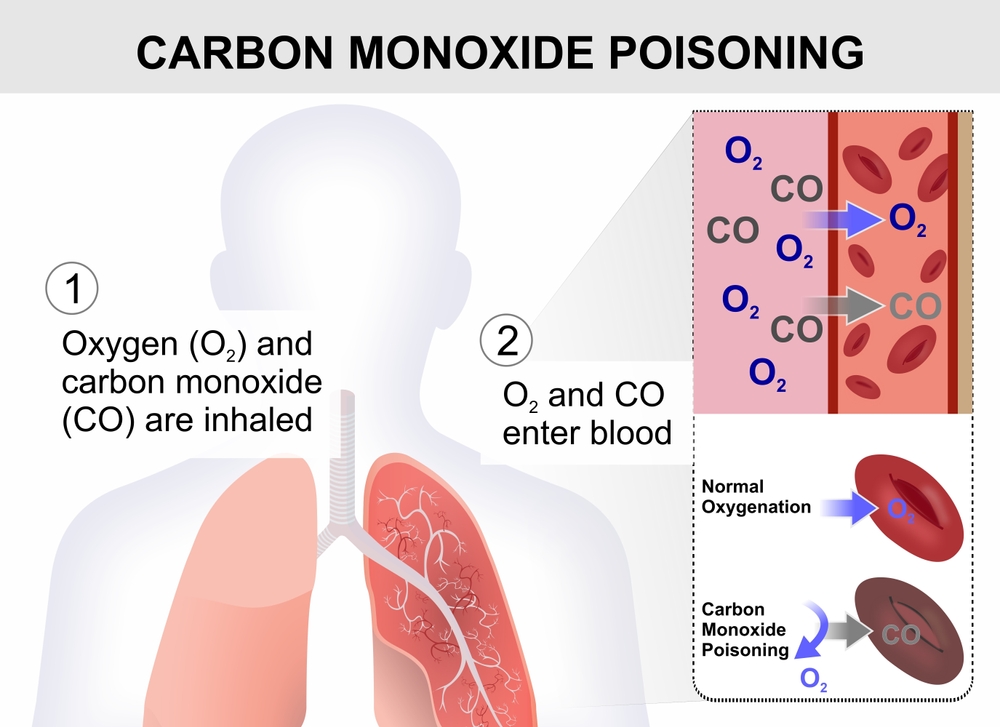
It starts with headaches and confusion and can very quickly progress to seizures - and even death. What happens during carbon monoxide poisoning? | Illustration: KAMAKSI, Shutterstock
The “Cherry-Red” Clue
Carbon monoxide is so toxic because it binds tightly to hemoglobin, the protein in the blood that carries oxygen to the body’s cells. When carbon monoxide binds to hemoglobin, it forms carboxyhemoglobin (HbCO)—a stable complex that prevents hemoglobin from binding oxygen (O₂) and delivering it to tissues. The result is that the person—and their organs—suffocate without feeling it. Carboxyhemoglobin gives the blood a bright red hue, and in people with light skin it is sometimes possible to notice a reddish flush during carbon monoxide poisoning, especially after death.
Fetal hemoglobin binds carbon monoxide even more strongly than adult hemoglobin, so fetuses are at increased risk of harm if their mother is exposed to the gas. Babies and children, who breathe faster than adults and weigh less, are also at increased risk of carbon monoxide poisoning.
In addition to hemoglobin, carbon monoxide binds to other proteins in the body and triggers an inflammatory response that adds to the damage caused by oxygen deprivation – especially in sensitive tissues such as the heart and brain. Older adults, who are more likely to have cardiac and neurological conditions, are at increased risk of life-threatening injury to these organs following such poisoning.
There is no antidote, but once people exposed to carbon monoxide are removed from the source, it gradually begins to detach from hemoglobin, allowing the blood to carry oxygen again. For this reason, treatment focuses on getting the person into fresh air and administering pure oxygen, which speeds the dissociation of carbon monoxide from hemoglobin. In some cases, patients also receive hyperbaric oxygen therapy in a pressurized chamber, which can accelerate carbon monoxide removal further and may reduce tissue damage caused by oxygen deprivation. However, the effectiveness of this treatment is disputed, and there is not enough evidence to support its routine use.
As in many other cases, the best “treatment” for carbon monoxide poisoning is prevention. Because we cannot sense the gas and it can be produced during fuel-burning, it is recommended to install a carbon monoxide detector at home. When heating with a fuel-burning appliance—such as a gas heater, wood stove, or fireplace—make sure the space is ventilated, even when it’s cold outside. Keep heating equipment properly maintained and have it inspected regularly. Also avoid spending long periods near an idling vehicle in enclosed spaces, such as a garage or underground parking area. If poisoning is suspected—for example, if symptoms appear while you are in an unventilated room heated by a fuel-burning appliance – open windows and doors immediately, get everyone outside to fresh air, and call your local emergency services.




 1 February 2026
  3 minutes